Wednesday, March 23, 2016

Unit 8 Reflection

This unit was about evolution. I  learned about the constant change in species which are due to evolution and natural selection. I also learned about Artifical Selection and that people breed animals because they want them to have favorable genes. Also, in this unit, there was the bird beak lab and I had difficulty collecting food because I had a spoon-shaped like a beak. In the Hunger Games Lab, I lost every round because I was slow in collecting the corks. From this lab, I learned why natural selection favors organisms that are better adapted to their environment. I want to learn about the different types of selection more. I still want to know why the population is evolving so fast? I wonder about why is earth rapidly changing? I have not been any more assertive since watching the video. I still need to work on trying to be more assertive in my life.

http://pranayjalanbio.blogspot.com/2016/03/unit-8-reflection.html

Geologic Timeline Individual Reflection

The three major events in Earth's history are Cretaceous, Jurassic, and Triassic. One of these three major events is Cretaceous. The cretaceous period is significant because it was the last and longest segment of the Mesozoic Era, also known as the "age of dinosaurs". The cretaceous period lasted for 79 million years. The second of these 3 major events is the Jurassic Period. The Jurassic Period is known for large plant- eating dinosaurs and smaller carnivores as well. We have discovered over 700 species of dinosaurs. The last of these 3 major events is the Triassic Period. The Triassic period followed the largest extinction event in the history of life and so was a time when the survivors of that event spread and recolonized the planet. The scale of Earth's history is categorized by era and major events. I was very surprised to learn how many millions of years have gone past. I feel sad because there has been so much destruction of species in a short period of time. I hope in the future we can find alternative ways of doing things so that the planet can try to recover. I really want to know more about the dinosaurs and how they came to live in the Mesozoic Era. 


Friday, March 11, 2016

Hunger Games Analysis

1. We collected food with different abilities. This simulates how different animals collect food with different abilities.


2. The pinchers were the best.


3.  Yes, the frequency of the A alleles has changed 52% in my 7th generation the big allele was 43%. The frequency of my trait was 48% after my 7th generation, my frequency was 57%.

4. The food placement was random. When you flip the coin it simulated reproduction and how random this trait will appear.  In this experiment, the knucklers were the phenotype that had the highest chance of survival.

Sunday, March 6, 2016

Bird Beak Lab


1. Graphs


2.  Part 1 Analysis

Individuals with better traits leave more offspring. The evidence for this is that in part 1 graph the tweezer beak had the highest number of chicks, eventually making up 39% of chicks. This is because the tweezer beak was able to collect more food. If they able to collect more food then there would be more offspring.

Populations begin to look more like the winners. The evidence for this is that the tweezer chicks  can collect more food, therefore, the offspring will survive. They “win” by getting food is competitive in nature. If more of the offspring survive, then the population of chicks will look like the tweezer chicks.

3. Part 2 Conclusion

In this lab we asked the question: If natural selection occurs in a population,how do changes in selective pressures affect the evolution of that species? We found that the organisms, in this lab birds, with better traits that allow them to get more food survive and leave more offspring. In our lab the chicks that were able to get more food, the tweezers chicks and the scissors chicks, made up a larger percentage of chicks (39% , and 27% respectively) . In part 2, when faced with the avian flu,  the tweezers and the scissors have the highest amount of offspring because they were able to collect more food. This relates to Darwin’s principle as his conclusion was that the organisms with the highest fitness would survive and pass on their genes to their offspring, leading to evolution of the species for organisms with the best traits.

While our data supported the hypothesis, the possible errors could have been due to the hands of students being tired or some students being quicker than others. This would lead to a disadvantage/advantage of getting food, this would alter the results because it's not based on the beak shape. Instead of using our hands, the lab would be improved by using a more uniform motion, like using shovels with different shapes. Also I would recommend that one student try out all of the different beaks instead of making different students using different beaks.

This lab was done to demonstrate the effects of selective pressure on the evolution of a species. From this lab I learned that the organism that has the best trait for the environment will have more offspring and pass on their genes, especially when faced with selective pressures that cause competition. This helps me understand the concepts of evolution and natural selection and how competition plays a role. Based on my experience from this lab, I can also think about how animals today have evolved in the world today and what traits make them best adapted, especially in environments heavily affected by humans.


Sunday, February 28, 2016

Story of Cosmetic

I chose to watch “Story of Cosmetics.” The video talked about the toxins that are in our everyday cosmetic products, such as shampoo, lipstick, and lotion. The possible toxins include carcinogens, neurotoxins, and many other types. I learned that less than 20% of the ingredients in our cosmetics is inspected. The video also talked about how certain companies, such as Proctor and Gamble, label their products as herbal or natural even though there is no basis for their claims. I learned that in the regulation of the cosmetic ingredients, cosmetic companies make their own rules, which is obviously a huge conflict of interest. These toxic ingredients don't only affect the consumer but also the workers and community that is exposed in. What needs to happen is to introduce new laws to prevent the toxic ingredients from being in the product, which relates to the “precautionary principles”.

The video surprise me because I wasn’t aware of the lack of regulations that goes into my products that I used everyday. I will be more careful about what products I will use by reading the label and seeing what ingredients there are.  I can also look for products that are label safe. I hope that my awareness will eventually contribute to my safety and I can spread that awareness.

Wednesday, February 24, 2016

Unit 7 Reflection

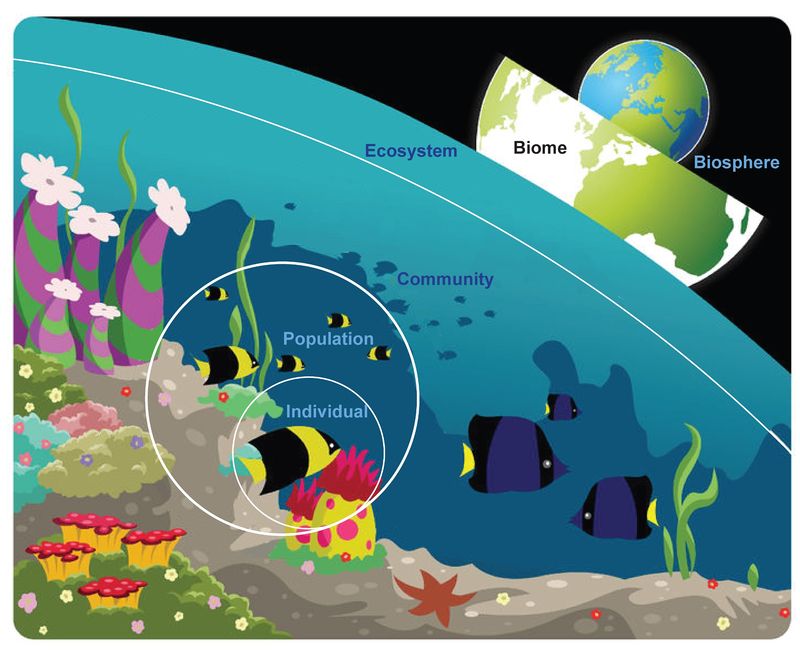
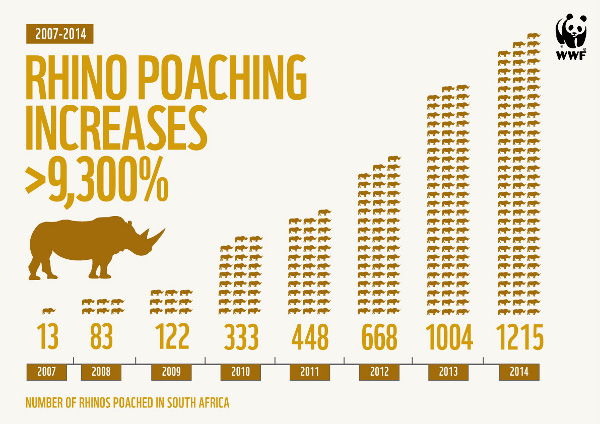
In this unit, we learned about ecology, interaction with organisms, and the interdependence organisms have on each other. For example, giant land snails could not exist without plants and algae to eat, and the plants and algae could not grow without bacteria and other organisms helping recycle nutrients in the water and soil. We also learned about the relationships between the different levels of organization in an ecological system including Individual, Population, Community, Ecosystem, Biome, and Biosphere. In the future, I hope to learn more about the ecological pyramids since we were not able to go over them as much as I had wanted to. As we finish this unit, I still want to know about the importances of each different trophic level. I wonder why 90% of transferred energy is lost as we go up each level of the energy pyramid. The vodcast we made went well because everybody said everything correctly and our presentation was put together nicely. Unfortunately, one thing that did not go well understanding the concept of biodiversity. I learned about the poaching in the African savannah. The collaboration went well because everybody researched their information.

Wednesday, January 27, 2016

Extra Credit Bioethics Reading

Summary:
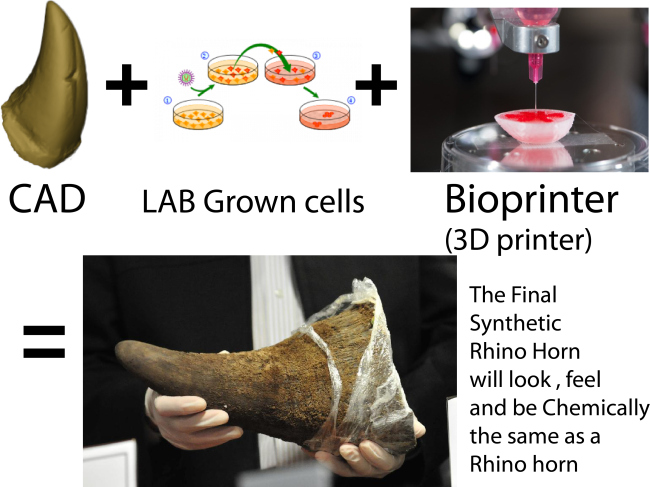
There are currently around 29,000 rhinos worldwide. In the last five years, poaching for rhino horns has increased dramatically  putting them in danger of becoming extinct.  Luckily, there is a new 3D printing technology that is capable of creating synthetic rhino horns. By engineering yeast cells to produce the same keratins found in rhino horns. Scientists can combine these keratins with trace elements of rhino DNA, and use the resulting material as an ink in a 3D printing process. The finished product is one with identical physical, genetic, and spectrographic properties as a wild horn.


Benefits: Currently, rhinos are dying at much higher rates than they are being born. With the development of 3D printing technology, fewer Rhinos will be poached and killed for their horns. Also, the illegal market for rhino horns will go away completely.  


Risks: Many people believe rhino horns are able to be used as a blood cleanser, fever reducer, hangover cure and even cancer treatment. The issue is, producing the synthetic horns reinforces the idea that they have some medicinal value when there isn’t any scientific evidence to support it. The past few years, scientists and conservationists have been denying that rhino horns have any medicinal value in attempts to discourage people from poaching them. But, if we continue to incorporate the 3D printers, we are only diverting additional attention away from more tested approaches to combating the issue.

My Position: In order to save more rhinos lives, we should keep 3D printing. Although there are many people who discourage the production of synthetic rhino horns. With the number of poachings increasing each year, using 3D printers is the most efficient way to stop a large number of rhino deaths.  

Works Cited


"3D Rhino Horns – Conservation or Exploitation?" PlanetSave. N.p., 06 July 2015. Web. 27 Jan. 2016. <http://planetsave.com/2015/07/06/3d-rhino-horns-conservation-or-exploitation/>.
The Independent. Independent Digital News and Media, n.d. Web. 27 Jan. 2016. <http://www.independent.co.uk/life-style/gadgets-and-tech/news/synthetic-rhino-horns-are-being-3d-printed-in-an-effort-to-defeat-poachers-10334751.html>.
N.p., n.d. Web. <http://wildtech.mongabay.com/2016/01/could-synthetic-rhino-horns-help-save-the-rhino/ >.