Thursday, November 19, 2015
Unit 4 Reflection
This unit is about the sex and the Punnett square and the different types of inheritance. A Punnett square is a square that helps predict the probability of getting certain traits. I also learned about sexual vs asexual production. Asexual reproduction requires only one parent and offspring are genetically Identical. Sexual reproduction requires only two parents and each parent contributes half of offspring's DNA through sperm or egg. My strengths in this class were shown when watching videos because I am a visual learner. My weaknesses are having to analyze and write after class when it is not fresh in my mind. I had a hard time learning about genetics because there's a lot to remember. I am good at putting the Punnett square together because it involves math and is straightforward and you don't have to remember a lot about genetics to be good at it. I learned the basics of asexual and sexual reproduction and how to generate genes. The infographic helped me to understand why genetics is important. Overall, I learned a lot from this unit. I know a bit about the Punnett square but I think there is much to learn. I am a kinesthetic learner and I need to do something physical to learn a concept. My preferred learning styles are visual (4) aural (3) read/write (4) kinesthetic (9). I was surprised how much of a kinesthetic learner I am. I think that when I prepare for the next test, I will make sure to do interactive kinds of studying. Using the internet to show me and working with my hands through drawing and labeling, etc.
Tuesday, November 17, 2015
Coin Sex Lab Relate and Review
In the Coin Sex Lab, we predicted the probability that certain genes will appear in human traits. The alleles were different in each prediction of traits. autosome is not a sex related chromosome.We studied gene segregation. My expected results was 50:50 in the ratio to males to females. My results were not 50:50 they were 2:3. The probability of having a bipolar child is 50:50. The results were off. My results were high that the child would have bipolar which is 70% not 50. The probability is 25% to have a child that has colorblindness which is an X-linked inheritance.I result were a little high with results of 7:3. My results with the dihybrid traits my results very high with traits brown hair, blue eyes which is homozygous or monohybrid. My results in brown eyes were heterozygous and homozygous but my results were small. My results were 7. The limit is only as good as using a perfect solution. Perfect results sometimes it happens and sometimes they don't. I received the combinations of certain traits from my mother and father and resulted in me. My sister has a recombination of traits from the same parents that resulted in her.
Thursday, November 12, 2015
Sunday, October 18, 2015
Unit 3 Reflection
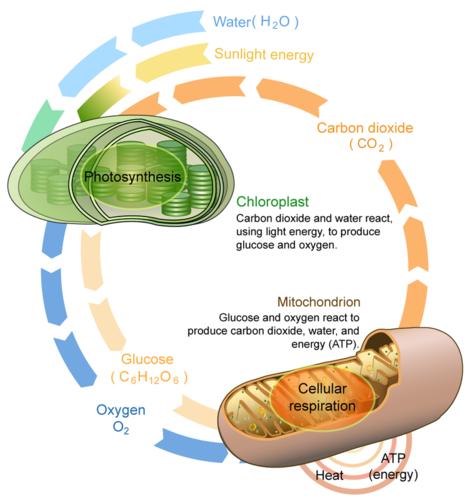
This unit was about the story of the cell, the parts of the cell and the different processes such as photosynthesis and cellular respiration that go on in the cell. It was also about the different kinds of eukaryotes and prokaryotes.

My strengths in this unit was understanding photosynthesis and cellular respiration. It is easier for me to follow processes. My weakness in this unit was remembering all the different parts of the cell
and their functions. Remembering is hard for me. A way for me to better understand is watching video and pausing it to get all of the information down. Watching video multiple of times would help me understand the material more. I am a better student because I know how to approach difficult material. I want to learn more on different parts of the cell. I wonder about what else can the cell do. For the test I can go over the notebook and check for concepts that I don't understand. I would also go over the vodcast and CFU
Wednesday, October 7, 2015
Egg Diffusion Lab
In this lab We use two eggs one in sugar water and the other in deionized water. In the deionized water the mass of the egg increased. There was a slight increase in circumference of the egg. In the sugar water the egg lost mass and the circumference decreased. There is a higher amount of solute outside the egg which is a hypertonic environment. When the egg was in the deionized water the egg increased in size because it was in the hypotonic environment. In the cell's internal environment changes by diffusion because by passive diffusion. When the egg was in the water the water moved into the cell because there was more solute inside. When the egg was in the sugar water the water moved out of the egg because there was more solute outside of the egg. This lab was demonstrating hypertonic and hypotonic solvent and there reaction to a cell it demonstrated passive diffusion where solvent and solute moved from a high concentration to a low concentration. Lastly it demonstrated movement of solutes and solvent moving across a membrane. In the supermarket vegetables sprayed with water to keep them fresh and moist. In Tahoe cal trans sprinkle salt on icy roads in order to melt the ice. This happens because it moves from low concentration to high concentration. This in turn melts the ice. So the road is safe to drive on. The plants will shirvel and die because the water within the cells of the plant will moved towards the salt. This a hypertonic situation. An example of the experiment I want to try will be the effect of using fresh water to water ocean plants. If you put kelp in fresh water it will die because it is not in salt water plants do not let salt diffuse into their cells.
Tuesday, October 6, 2015
Egg Macromolecule Lab conclusion
Egg Macromolecule Lab
In this lab we asked the question can macromolecules be identified in an egg cell. I found that in an egg cell, the egg membrane contains monosaccharides, polysaccharides, protein, and lipids. The egg yolk contains monosaccharides, polysaccharide, protein, and lipids. The egg white contains polysaccharides and proteins. I found that different types of egg such as egg white, egg yolk, egg membrane had different types of macromolecules. When tested for monosaccharide, the egg membrane in the qualitative observation turned green/purple and the egg yolk, for the qualitative observations, turned greenish blue when treated with Benedict’s solution. When tested for polysaccharide in which the egg cell was treated with iodine, the egg membrane turned to brownish color, the egg yolk turned orange color and the egg white turned light orange. When tested for protein in which the egg cell was treated with NaOH and CuSO4, the egg membrane turned blue, the egg yolk turned green and egg white turned dark blue. When tested for lipids in which the egg is treated with Sudan III, the egg membrane turned tinted orange and the egg yolk turned yellow mixed with red.
Our data was unexpected because an error that affected the data which is that I didn’t observed the eggs carefully enough. This error could have affected my data by skewing the numbers for the quantitative amount of macromolecules. Due to these errors in future experiments I would recommend to make sure to observe more carefully and record the correct information. I would also recommend that all of the group members say their opinion on the color.
This lab was done to demonstrate the different types of macromolecules in the different parts of the egg cell. From this lab I learned about different types of test to look at which macromolecules are present. I also learned which macromolecule are present in different parts of the egg which helps me understand the concept of where the macromolecule are in the cell and cell biology. Based on my experience from this lab, I can apply the concepts with a cell. The procedure can be improved by using two eggs for each test to see if the color is consistent. Another situation that applies to look at your skins on your fingertips when in water.
Thursday, October 1, 2015
20 questions about nature of the universe
What's so weird about prime numbers?
I am interested in this question because I like math, and I am very interested in numbers.
The current hypothesis for this question is:
If you find one prime number, there is no way to tell where the next one is without checking all the numbers as you go. One possible way to get a handle on how primes are spaced is to calculate, for any number, how many primes there are smaller than it.
My 20 Questions are:
1.Why is the sky blue?
2.How high can planes go up to after takeoff?
3.What speeds can planes go during takeoff?
4.Why do whales have blowholes?
5.Why do dogs have better hearing than humans?
6.What is the speed of light?
7. What causes hurricane?
8. How do planes survive in natural disaster?
9. How do people survive in hurricane?
10.What do you if the lightning strikes the ground?
11.How do bees pollinate flowers?
12.Why do people get allergic reaction?
13.Why don’t oil and water mix?
14.What causes corn to pop on heating?
15. Why does avocado turn brown when exposed to air?
16. What causes the rainbow?
17. What causes rusting of iron?
18. Why do bears hibernate in the winter?
19. How do penguins hunt for food?
20. How do plants get nutrients from the soil?
Subscribe to:
Posts (Atom)